
“How Smart Regulation Can Enable Safer, More Inclusive Ride-Hailing Ecosystems”
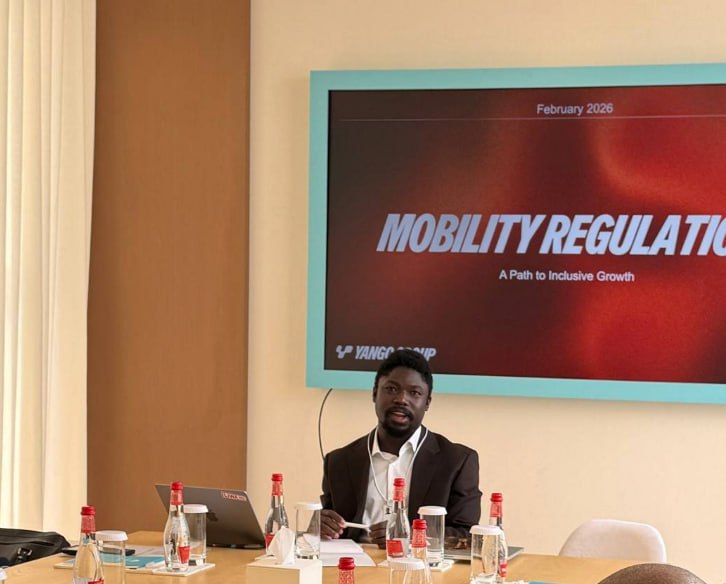
𝘿𝙪𝙗𝙖𝙞, 𝙐𝘼𝙀, 10𝙩𝙝 𝙁𝙚𝙗𝙧𝙪𝙖𝙧𝙮 2026– Yango Group, the global technology company that creates daily services, hosted a high-level mobility policy workshop led by its Chief Business Officer Adeniyi Adebayo during the 2026 World Government Summit in Dubai. The session brought together policymakers, government representatives and industry stakeholders to discuss how public-private collaboration can support effective ride-hailing regulation across emerging markets.
The workshop focused on how clear, low-friction regulatory frameworks can help governments modernise urban mobility while ensuring fair competition, passenger safety and sustainable market development. Discussions highlighted the importance of defining transparent roles for digital platforms, drivers and fleet operators to reduce regulatory uncertainty and create predictable operating environments that benefit all stakeholders.
Global case studies demonstrated how well-designed regulatory clarity can support market stability and improve service availability. Case studies illustrated how cities have successfully integrated digital ride-hailing platforms alongside traditional transport systems, expanding mobility access while maintaining effective public oversight.
Portugal was presented as a practical example of enablement-oriented regulation. The country’s 2018 ride-hailing law formally recognised digital platforms, introduced streamlined licensing processes, and avoided restrictive vehicle caps or fare controls. As a result, the number of licensed ride-hailing drivers grew from approximately 18,000 in 2018 to more than 66,000 by 2023, supporting broader consumer choice and improved service coverage while maintaining safety and compliance standards.
The workshop also explored how regulatory clarity can accelerate fleet modernisation and improve road safety outcomes. Examples from African markets illustrate how policy alignment with financing and operational models can support the transition to newer, safer and more environmentally efficient vehicles, reducing emissions and improving passenger experience.
Speaking during the workshop at the World Government Summit, Adeniyi Adebayo, Chief Business Officer at Yango Group, said: “Effective mobility regulation is built on clarity and proportionality. When governments define transparent rules for platforms, drivers, and fleet operators, they create safer services, encourage responsible investment, and provide the stability needed for sustainable market growth”
Participants further emphasised the importance of cross-ministerial coordination, particularly between transport, digital economy and economic development authorities, to ensure mobility regulation reflects its broader economic and social impact.
Attendees of the workshop exchanged opinions where they emphasized the high relevance of the materials and actively asked questions reflecting the specific situations in their respective countries, highlighting diverse challenges — from choosing appropriate tax regimes and financing fleet renewal to addressing safety and security issues in different transport modes — while maintaining a very positive attitude and considering the workshop highly productive and engaging.
The discussion generated several key policy recommendations, including the need to establish clear legal frameworks and streamlined digital licensing processes; prioritising advanced digital safety tools such as trip traceability and in-app safety features; avoiding restrictive measures that could reduce service availability or drive activity back into the informal sector; and adopting evidence-based, adaptive regulatory approaches that evolve alongside market developments.
Yango reaffirmed its commitment to constructive policy dialogue and collaboration with policymakers and industry stakeholders across its markets, supporting regulatory frameworks that enable inclusive, safe and sustainable digital mobility ecosystems.