
As Zambia continues its push toward sustainable development, the conversation around clean energy and low-emission transport is becoming increasingly urgent. Rapid urbanisation, rising fuel costs, and pressure on the national power grid have exposed the limits of traditional transport models, particularly in high-usage urban mobility such as passenger, courier and delivery services. Electric vehicles (EVs), especially electric two-wheelers, are emerging as one of the most practical solutions for cities like Lusaka. Unlike conventional vehicles, electric motorbikes produce zero tailpipe emissions, directly reducing air pollution and carbon output in densely populated areas. When deployed at scale, they offer one of the highest environmental returns per vehicle, making them an efficient entry point into nationwide electrification efforts.
Beyond emissions, energy resilience remains a key concern. Grid instability and power outages can disrupt livelihoods and limit economic productivity. New mobility models that combine electric transport with renewable energy are demonstrating how transport infrastructure can support, rather than strain, existing power networks. By capturing and storing energy when generation is high and releasing it during peak demand, these systems add flexibility and resilience to urban energy use.
For many rural and peri-urban residents, motorcycles are lifelines—connecting families to markets, schools, and health services where conventional transport is sparse.
Worthy of note is the rapid growth in EV Adoption across the country. After Zambia removed customs duties on electric vehicle imports in January 2024, EV adoption started to accelerate
sharply. Registered electric vehicles grew by about 334 % from 62 in early 2024 to 269 by mid-2025. Also, the total EV imports reportedly surged 1,345 % after duty removal, with 896 units brought in between Jan 2024 and July 2025.
Another promising innovation is battery-as-a-service. Instead of long charging times or high upfront costs, riders can swap depleted batteries for charged ones within minutes. This model reduces downtime, lowers entry barriers for workers, and makes clean mobility accessible to a broader segment of the population, particularly young people seeking economic opportunities in the delivery and logistics sector.
Crucially, these developments align with Zambia’s Eighth National Development Plan and the country’s commitments under the Paris Agreement. Sustainable transport, renewable energy adoption, and job creation are no longer isolated goals; they are interconnected pillars of long-term growth. Public-private collaboration will be key in translating these ambitions into practical, scalable solutions that can grow from pilot initiatives into national systems.
Zambia’s electricity supply is predominantly hydroelectric, providing a relatively low-carbon grid. This strengthens the environmental case for EVs—especially if more renewable capacity is added. Partnerships are emerging that link solar mini-grids with electric 2 & 3 wheelers in rural areas, tackling both electricity access gaps and transport needs.
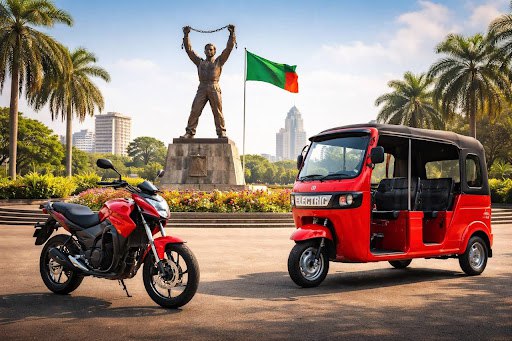
Electric motorcycles and tuk-tuks use electricity instead of petrol, reducing fuel spending—a major advantage in a country spending billions on fuel imports.Currently , Zambia spends over US$2 billion annually on fuel imports—transitioning transport to electricity could meaningfully cut this drain on foreign exchange.
Electric two- and three-wheelers don’t just improve transport—they can catalyse job creation in assembly, maintenance, charging infrastructure, and battery services, especially among small and medium enterprises.
While the shift to electric mobility may begin with small, strategic deployments, its potential impact is significant. Cleaner air, more reliable energy use, and inclusive economic participation point to a future where sustainability is not just an aspiration, but a lived reality on Zambia’s roads.
For many rural and peri-urban residents, motorcycles are lifelines which connect families to markets, schools, and health services where conventional transport is sparse. Superapps like Yango and many other ridehailing and delivery companies in Zambia should lead the way in ensuring that regulation is strictly adhered to and safety is a priority in the operation of such 2&3 wheelers.