
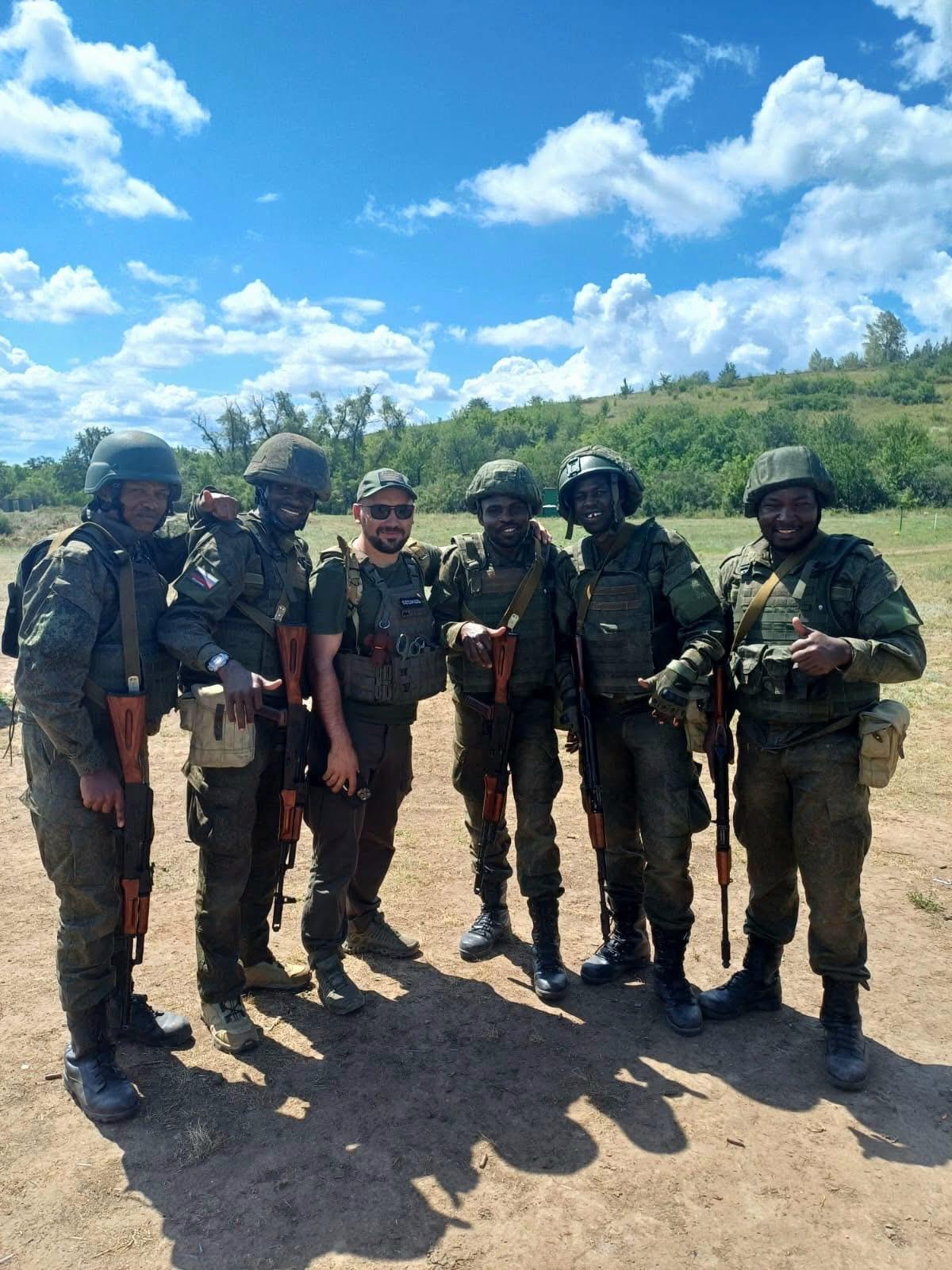
As the conflict between Russia and Ukraine enters its fourth year with no end in sight, a dark and desperate shadow has fallen over the African continent. What began as isolated reports of recruitments has transformed into an organized “business of despair” that preys on the hopes of the young.
On February 25, 2026, Ukrainian Foreign Minister Andrii Sybiha delivered a chilling update: more than 1,780 citizens from 36 African countries are now confirmed to be fighting for the Russian army. This staggering number represents a human tragedy of immense proportions. These men are often victims of “fraudulent schemes” lured by the promise of high-paying jobs in security or construction, only to have their passports seized and be forced into military contracts they cannot read.
Zambia received an early, grim warning in the form of Lemekhani Nathan Nyirenda. A gifted 23-year-old student sponsored by the government to study nuclear engineering in Moscow, Lemekhani’s life took a tragic turn in 2020. While working as a part-time courier, he was arrested for carrying a package containing drugs a charge his family maintains was a setup.
By 2022, he was recruited from his prison cell by the Wagner Group with the promise of amnesty. He died on the battlefield on September 22, 2022. His death remains the first official confirmation that Zambian students were being used as “cannon fodder.”
That same cycle of despair has claimed another life: Chongo Chomba. At 30 years old, Chongo was the “pillar” of his home. Driven by the silent pressure of economic hardship, he sought a way to build a better future for his family. He wasn’t looking for a war; he was looking for a way to be a hero for those he loved.
The tragedy of Chongo is that his devotion to his family was used against him. Recruiters promise massive payouts, but the reality is bleak. By February 2026, reports show that Russia has slashed compensation for the wounded. African recruits, who survive an average of only six months, often die before seeing a single ruble. If killed, they are frequently classified as “Missing in Action” (MIA), allowing the military to avoid paying death benefits to families in Zambia.
The recruitment process has moved into the digital space. Leaked video evidence shows recruiters addressing Southern Africans with disarming smiles, offering $7,600 signing bonuses and “free flights.”
These offers, promoted by paid African influencers and TikTok bloggers, act as a “digital trap.” Under the guise of tech roles or construction jobs, recruits are diverted into drone factories or the front lines. For many in Lusaka or the Copperbelt, these ads look like the answer to a prayer, but they are the first step into a nightmare.
In a move to save face, Moscow has reportedly issued a “stop-list” of 43 countries including Kenya, Nigeria, and South Africa where recruitment is now banned following diplomatic outcries. However, Zambia is not on that list.
Security analysts now call Zambia a “green zone” for recruiters. As major doors close in neighboring countries, shadow networks are shifting their focus toward nations that haven’t yet secured a blacklist status.
The lack of a formal ban has sparked deep concern across Zambian society, with leaders and citizens alike warning that the silence of the state might be an invitation to predators.
Leading the outcry is prominent activist Brebner Changala, who warns that the recruitment tactics have become a sophisticated trap designed to deceive both men and women.
“They don’t tell you that you are going as a soldier,” Mr. Changala observed. “For women, they promise bachelors’ scholarships or jobs in hotels and restaurants. But when they arrive, they are actually made to work in drone manufacturing warehouses. For the men, they also promise normal jobs drivers or construction work but they are the ones taken to the front line. It is a deception where they don’t even ask for your grades; if the deal is too easy, you must know where you are going, If you are going for a scholarship in the Europe, they ask for your application, your results, and your English proficiency. But here, they aren’t even asking for your grades. They just want you on that seat. If you are going to a very serious environment and they aren’t asking for anything, you must know where you are going.”
He also raised a hard point regarding the silence from our own leaders compared to our neighbors.
Changala warns that we shouldn’t wait for a routine of body bags before we act.
The lack of a formal ban has sparked outrage among Zambians. Mwamba K., a student in Lusaka expressed his fears regarding the government’s silence.
“Kenya and South Africa have told Russia to stay away from their youth, but Zambia is just missing,” Mwamba said. “With the current cost of living, my friends will jump at a $7,600 offer because they don’t know the truth. Our government needs to do something before we lose another Lemekhani,We are deeply alarmed that Zambia remains a ‘Green Zone’ for foreign military recruitment,” the statement read. “This is a result of predatory networks exploiting our youth. We call upon the Ministry of Foreign Affairs to immediately demand that Russia include Zambia on its recruitment ‘Stop-List’ to prevent more body bags from arriving at Kenneth Kaunda International Airport.”
From a legal perspective, the situation is being treated as a human rights crisis. Counsel B. Mwale, a human rights law expert, noted that many of these contracts are legally void under international law.
“These contracts are often signed in a language the recruit does not speak, which qualifies as human trafficking under coercion,” Mwale explained. “By not being on the ‘Stop-List,’ Zambia allows recruiters to operate in a legal ‘grey area.’ We need a diplomatic shield to protect our people, or we will have no leg to stand on when our citizens go missing.”
For Zambia, the question remains: are we waiting for the list of casualties to grow longer before we demand to be on the list that keeps people safe? From the prison cell of Lemekhani Nyirenda to the fraudulent digital ads targeting the youth today, the “business of despair” is at the doorstep.