
By Staff Reporter
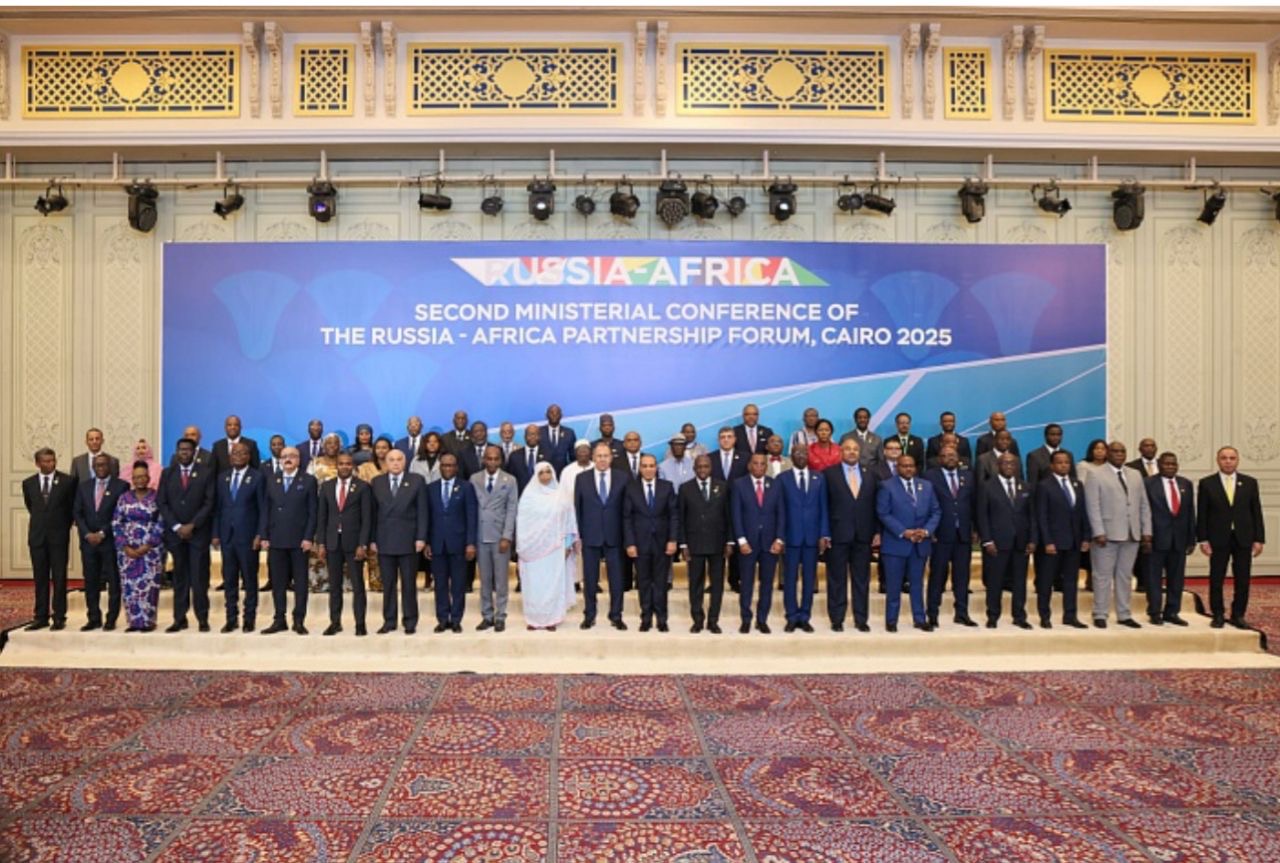
Zambia was among the African countries represented at the Second Ministerial Summit of the Russia–Africa Partnership Forum, held from 19 to 20 December 2025 in Cairo, Egypt. The meeting brought together African and Russian foreign ministers to deepen political, economic and security cooperation under a framework launched last year in Sochi.
According to a statement issued by the Ministry of Foreign Affairs and International Cooperation, Minister of Foreign Affairs and International Cooperation, Mulambo Haimbe, S.C., attended the summit at the invitation of Egypt’s Foreign Minister, Badr Abdelatty, and Russia’s Foreign Minister, Sergey Lavrov for the first ministerial conference held on African soil.
The Ministry described the summit as a platform for “regular, structured and sustainable dialogue” between Africa and the Russian Federation. Discussions reportedly focused on strengthening cooperation and addressing regional and international issues, including peace, security and global stability. On the margins of the meeting, the Minister was expected to hold bilateral engagements to advance collaboration in priority areas.
“Zambia’s participation underscores its continued commitment to dialogue, multilateralism, and the peaceful resolution of conflicts, as well as its dedication to strengthening diplomatic relations, expanding economic cooperation, and contributing to Africa’s collective development and stability,” according to a statement by the ministry.
However, Zambia’s presence at the Forum has drawn some attention to what was not publicly addressed during the high-level engagement. In recent months, international media and human rights organisations have raised concerns about alleged human trafficking and labour exploitation linked to Russia’s Alabuga Start Programme, which reportedly targets young Africans with promises of work or training. Other reports have documented cases of African men being recruited to fight in the war in Ukraine, in some instances under deceptive or coercive circumstances. A couple of Zambian girls have been recruited on the programme, with one of the girls spoken to by Makanday Centre for Investigative Journalism, named Tabitha, casting a very different light on what the recruits are experiencing on a programme marketed as lucrative. After a year of working at Alabuga, Tabitha still does not understand what goes on there and hinted that several girls have returned because they couldn’t cope after being promised a rosy lifestyle.
Despite this background, Zambia opted not to raise these concerns during the Russia-Africa Forum, either in plenary discussions or bilateral meetings. This silence has sparked debate among governance and human rights actors about whether African governments are using such platforms to adequately defend the rights and safety of their citizens abroad.
“Government is not being straightforward in its international dealings, and that is why the truth about the Alabuga Start Programme is not coming out,” human rights activist Brebner Changala has charged, as controversy deepens over the recruitment of young Zambian women to Russia.
Mr Changala said the Zambian government has a tendency to be secretive in its relations with other countries, making it difficult for citizens to understand what agreements are being entered into on their behalf.
He called on the media to rise up and demand accountability, further urging families of Zambian girls currently in Russia under the programme to come forward and demand the return of their girls.
Mr Changala said the government is unlikely to give a clear and conclusive response on the matter.
He further wondered why the Minister of Foreign Affairs did not raise the issue when he attended the Russia-Africa relations summit in Cairo from December 19 to 20, describing the silence as further proof of government’s lack of transparency.
“That’s the problem with our government, lack of transparency, they’re are not straight forward about their international dealings, and they’re so secretive, so I charge you to put it out publicly and call on families of the affected girls to come through so that they children are brought back,” said Changala.
Zambia has historically projected itself as a proponent of peace, human rights and non-alignment in international affairs. Observers note that this legacy places an added expectation on the country to speak out on matters that directly affect Africans, particularly where vulnerabilities such as trafficking, forced labour or recruitment into armed conflict are alleged.
The Ministry of Foreign Affairs confirmed that Zambia did not raise any issue regarding Alabuga but focused on enhancing trade between the two countries.
As Africa-Russia relations continue to evolve amid shifting global dynamics, the challenge for countries like Zambia is balancing strategic engagement with principled diplomacy. For many stakeholders, participation in forums of this nature should not only advance cooperation but also provide space for difficult conversations about human rights, accountability and the protection of African lives.
Whether future engagements under the Russia-Africa Partnership Forum will include more explicit discussion of these concerns remains to be seen. What is clear is that the questions raised by civil society are unlikely to fade, and the expectations on African governments to address them directly are growing.
Sadly, the Alabuga Start scandal has now gone beyond Africa’s borders, expanding into Latin America and South Asia, and targeted to recruit 8,500 new workers in 2025 to produce military drones in facilities designed to accommodate up to 41,000 people.. Official Russian data from 2024 shows that so far, over 111,000 African workers arrived in Russia, a 50% increase since 2022.