
By Tafwa Chikomeni
As Zambia counts down to the general elections scheduled for August 13, 2026, the nation stands at a defining crossroads. For decades, the country has been celebrated as a beacon of peaceful political change in Southern Africa, a reputation forged through orderly transfers of power and respect for constitutional rule.
Today, however, that legacy is under scrutiny as stakeholders raise concerns about shrinking democratic space and the conduct of the ongoing electoral delimitation process.
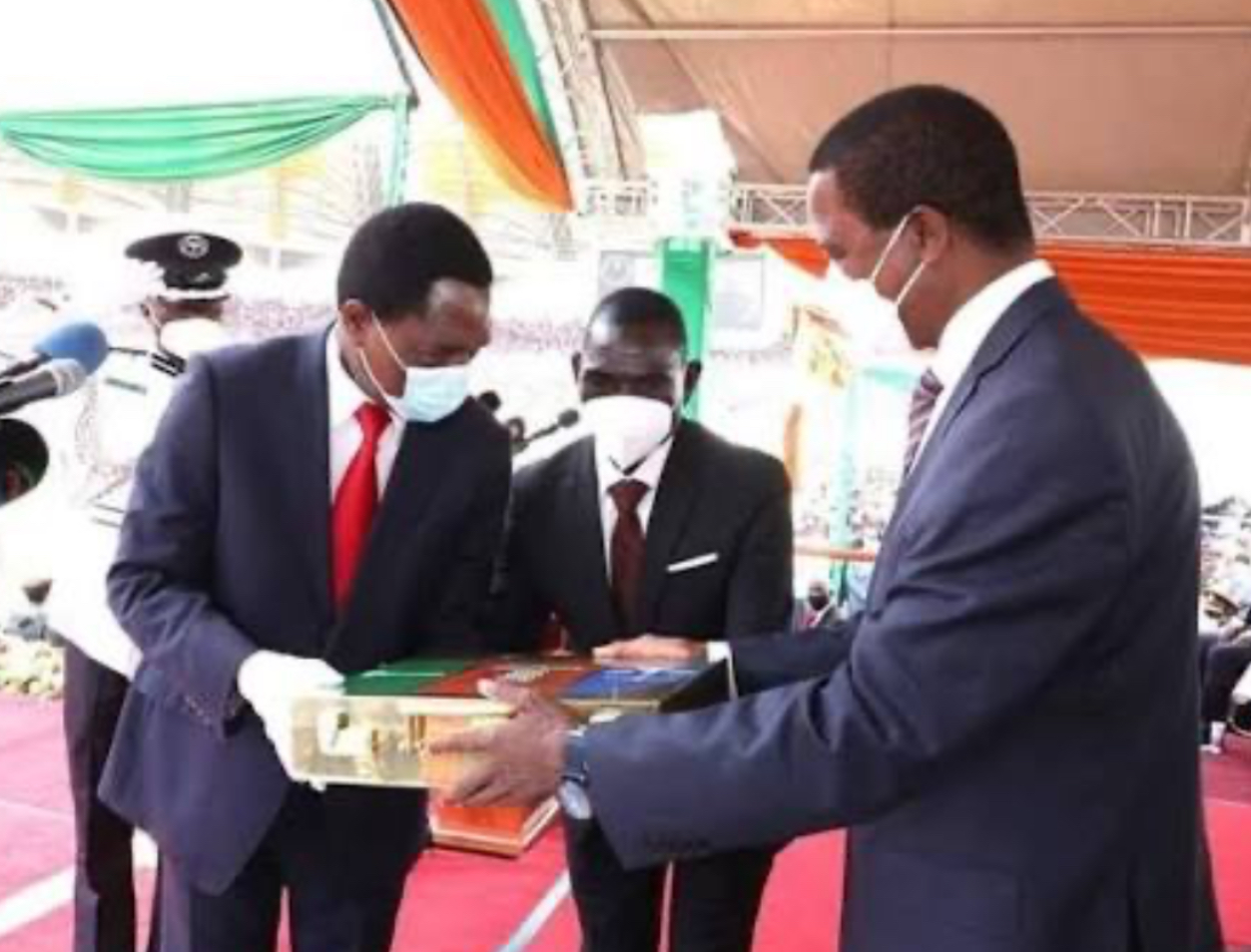
Zambia’s democratic credentials have long rested on historic smooth and peaceful transitions of power from the United National Independence Party (UNIP) to the Movement for Multi-Party Democracy (MMD) in 1991, from MMD to the Patriotic Front (PF) in 2011, and from PF to the United Party for National Development (UPND) in 2021.
Each handover reinforced Zambia’s image as a model democracy in a region often marked by political turbulence.
But as the 2026 polls approach, civil society organisations, church bodies and legal professionals warn that the integrity of the electoral process must not be taken for granted.
The stakes for Zambia’s democracy
Free and fair elections are not merely procedural events. They are the lifeblood of constitutional democracy, the mechanism through which citizens confer legitimacy on leaders and hold them accountable. In Zambia’s case, the upcoming elections will test whether its institutions can withstand political pressure and preserve public trust.
Concerns have emerged from influential stakeholders including the Zambia Conference of Catholic Bishops (ZCCB), the Council of Churches in Zambia (CCZ), the Evangelical Fellowship of Zambia (EFZ), and the Law Association of Zambia (LAZ). These bodies have raised alarm over a shrinking democratic space, citing the enactment of repressive laws and concerns over executive overreach into the judiciary and legislature.
Particular controversy has surrounded Constitution Amendment Act No. 13 of 2025, which introduced sweeping changes to Zambia’s electoral framework and provided for the creation of over70 new constituencies. Critics argue that the law was rushed through Parliament without sufficient consultation, raising fears about transparency and inclusiveness.
At the centre of the debate is the delimitation exercise being conducted by the Electoral Commission of Zambia (ECZ), tasked with redrawing constituency boundaries ahead of the 2026 elections?
Delimitation under the microscope
A consortium of civil society organisations, which include the Southern African Centre for the Constructive Resolution of Disputes (SACCORD), the Institute for Policy Analysis Centre, Gears Initiative Zambia, CePHRAD, and the Zambia Centre for Transparent and Responsive Leadership, is currently monitoring the delimitation process.
Arthur Muyunda, Secretary of the Consortium and Executive Director of SACCORD, says the group’s monitoring teams are operating at district and provincial levels, making independent submissions and conducting sample monitoring visits.
“The Consortium of Civil Society Organizations on governance and constitutionalism is currently monitoring the ongoing delimitation exercise being conducted by the Electoral Commission of Zambia across the country. Our monitoring teams comprise member organizations operating at district and provincial levels, who have been permitted to make independent submissions in their respective areas,” Muyunda said.
He noted that consortium leadership has been conducting field observations, including in Southern Province, to assess how public hearings are being conducted.
Technical complexity and public preparedness
One of the consortium’s key concerns is the highly technical nature of the delimitation exercise.
“The delimitation process is highly technical,” Mr Muyunda explained. “Many members of the public have not been adequately prepared to meaningfully engage with the technical details, statistics, and legal framework governing the exercise.”
He said the ECZ’s approach appears to emphasise surface area and overall population density including children and unregistered residents when proposing new constituencies.
“While these are relevant considerations, the voter population, that is, registered voters is a critical electoral indicator that must not be overlooked,” he said.
According to Mr Muyunda, Article 59(e) of the Constitution requires that both total population and registered voter population be considered to achieve the constitutional standard of “approximate equality of constituency and ward population”.
“Electoral boundaries are designed primarily for representation in elections and must therefore reflect voter distribution in addition to general population figures,” he added.
Risk of over-expansion
Another concern is the potential over-expansion of constituencies beyond the targeted number.
“The delimitation guidelines appear to encourage districts to propose the creation of additional constituencies, including in areas that are already relatively small in terms of both general population and registered voter population,” Mr Muyunda said.
He warned that if each of Zambia’s 116 districts recommends one or two new constituencies, the total could rise to nearly 350, far beyond the targeted 226 constituencies.
“Such an outcome risks undermining coherence, proportionality, and national equity,” he cautioned.
The consortium notes that earlier technical recommendations reportedly proposed adding 70 constituencies as a flat figure, seven per province, to promote greater equality. Any departure from such a formula, Mr Muyunda said, must be clearly justified.
“Any departure from such an approach must be justified by clear, transparent, and evidence-based reasoning, rather than perceptions of political gerrymandering or regional balancing in the National Assembly,” he said.
Politicisation and public trust
Perhaps most troubling, according to the consortium, are signs that the delimitation process may be influenced by political considerations.
“There are growing public fears that submissions made at district level may not ultimately influence final decisions,” Mr Muyunda said. “Additionally, we have observed indications that in some areas the process is being driven by political calculations, particularly by serving Members of Parliament from both the opposition and ruling parties who have interests in contesting in areas where they will gain significant advantage.”
He emphasised that while all citizens have a right to participate, boundaries must be drawn based on objective criteria.
“It is essential that Provincial Consultations respect evidence-based submissions made at district level and avoid tailoring boundaries to individual political interests.”
The consortium has recommended that the ECZ explicitly include registered voter population in its guidelines, provide clearer technical guidance at provincial consultations, adhere to evidence-based targets, and convene a national consultative and verification forum before final decisions are made.
Most importantly, it has called for the timely publication of the final delimitation report.
“We reiterate the need for the Commission to publish its final delimitation report and decisions in good time before the dissolution of Parliament,” Mr Muyunda said. “This publication is distinct from the constitutional requirement for the formal gazetting of names and boundaries and is essential for transparency and public confidence.”
Safeguarding Zambia’s democratic future
The importance of the August 13, 2026 elections cannot be overstated. Beyond determining who governs, the polls will signal whether Zambia’s institutions remain resilient and impartial.
For decades, the country has avoided the electoral violence and constitutional crises that have marred politics elsewhere. That record has attracted international respect and investment, reinforcing Zambia’s standing as a stable democracy.
But democratic reputation is not static. It must be continually earned through credible processes, institutional independence, and active citizen participation.
As Mr Muyunda put it, “The integrity of the delimitation exercise will directly influence public confidence in the 2026 general elections. Electoral justice begins with fair boundaries. If citizens believe the process is transparent and evidence-based, it strengthens trust in the outcome regardless of who wins.”
With a few months before Zambians head to the polls, the message from civil society is clear: free and fair elections are not optional, they are foundational. The credibility of August 13, 2026 will determine whether Zambia continues to shine as a model democracy or faces avoidable doubts about the strength of its constitutional order.
The world will be watching. More importantly, so will the Zambian people.