
By Joseph Mapalo Kamanga
Government has expressed deep concern over the slow implementation of the Sustainable Luangwa Project, citing low disbursement rates and delays in executing planned field activities as serious bottlenecks to the national environmental agenda.
Ministry of Green Economy and Environment Permanent Secretary Douty Chibamba said these implementation challenges require collective attention and immediate corrective action from all participating partners.
Dr Chibamba explained that it is critical for all responsible institutions to strengthen their operational coordination, improve the timely rollout of community programs, and enhance both financial and technical reporting to secure maximum value from project resources.
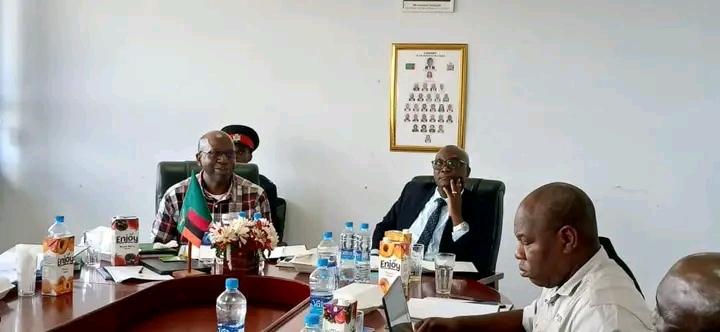
He was speaking in Chinsali when he officially opened the second National Steering Committee meeting for the Sustainable Luangwa Project, a high-level environmental initiative funded under the Global Environment Facility (GEF-7) cycle.
The project, titled ‘Securing Luangwa’s Water Resources for Shared Socioeconomic and Environmental Benefits through Integrated Catchment Management’, targets the preservation of the ecologically fragile Mafinga Hills landscape.
Dr Chibamba stated that the initiative is designed to achieve two major national goals, which are improving rural livelihoods and promoting sustainable biodiversity management within the headwaters of the Luangwa River.
He observed that the project contributes directly to Zambia’s national development goals, particularly in rural wealth creation, climate change adaptation, and the accelerated transition toward inclusive green economic growth.
The Permanent Secretary noted that the steering committee meeting is vital for approving the 2026 work plan and budget, and for reviewing the newly compiled independent mid-term review report to guide the remaining project lifecycle.
Speaking at the same event, Muchinga Province Permanent Secretary Tuesday Bwalya said local communities are already witnessing positive structural changes from the ongoing interventions.
In a speech read on his behalf by Deputy Permanent Secretary Brian Sichande, Dr Bwalya highlighted improvements in river flow, better water quality, and increased rural community adoption of sustainable land management practices.
He cautioned, however, that the unique Mafinga Hills ecosystem remains under severe threat from rapid population growth, deforestation, unsustainable charcoal burning, and shifting agricultural practices.Dr Bwalya observed that protecting the critical watershed is a collective responsibility for both present and future generations, stressing that conservation only succeeds when local communities are placed at the absolute center of operations.Meanwhile, the World Wide Fund for Nature (WWF) Zambia has reaffirmed its long-term strategic commitment to supporting the government’s green economy vision by moving away from isolated project interventions toward broader landscape-level conservation models.
WWF Zambia Project Manager Astrid Breuer, who joined the national meeting virtually from the United States, detailed that the project is targeting over 40,000 hectares of high-value land for sustainable environmental management.
Ms Breuer revealed that key milestones include establishing formalized Community Forest Areas and strengthening the statutory legal protection of the Mafinga Hills National Forest Reserve.
She added that WWF is collaborating heavily with the Water Resources Management Authority (WARMA) to establish a designated Water Resources Protected Area in the upper sub-catchments to safeguard the country’s water supply.
Ms Breuer further stated that through deep cooperation with the Ministry of Agriculture and local organizations like COMACO, the project is actively helping more than 2,600 rural households adopt climate-smart agricultural techniques to build household resilience against climate shocks.The high-level meeting was attended by Kapasa Makasa University Vice Chancellor Jacob Mwitwa, Mafinga District Commissioner Boyd Kaonga, Director of Environmental Management Richard Mfumu Lungu, and Director of Forestry Freddie Siangulube, among other senior government officials.
©️Zambia Reports, May 21, 2026