
The United Nations Children’s Fund ( UNICEF ) Zambia, in partnership with Airtel Zambia and the Ministry of Education, is working to connect the remaining 200 schools to a national digital learning platform before the end of 2026, as the three-year Digital Education Programme approaches completion.
By Gibson Zulu,
The Digital Education Programme began in 2024 with the aim of improving equitable access to quality education by connecting 500 schools across Zambia to digital learning resources. The project targets 500 schools.
Speaking to Zambia Reports during a school visit to St. Monica’s Secondary School in Lusaka, UNICEF Zambia Education Officer Selina Mtonga said the project was designed to support the Ministry of Education in expanding access to digital education.
“The project aims to connect 500 schools across the country to a digital learning platform,” Mtonga said, adding that Airtel Zambia, through a Memorandum of Understanding with UNICEF, is responsible for providing internet connectivity to beneficiary schools.
“Airtel provides 160GB of internet bundles to each school every month and will continue to do so until the end of the project,” she told Zambia Reports, adding that the support is being provided as part of Airtel’s Corporate Social Responsibility.
According to Mtonga, about 300 schools have already been connected to the platform, leaving 200 schools to be connected before the project concludes later this year.
She further disclosed that Airtel’s support extends beyond internet connectivity by facilitating blended education training for teachers participating in the programme.
Learners welcome initiative but cite challenges.
Despite highlighting the programme’s benefits, some learners cited challenges affecting their learning experience.
One pupil described the platform as beneficial but said unreliable internet connectivity sometimes limits access.
“It is a good learning platform and is very helpful to me. However, I experience internet connectivity failures because sometimes it gets slow,” the learner told Zambia Reports.
Another learner said not all school subjects are currently available on the platform, limiting its usefulness for some students.
Meanwhile, Government welcomes partnership.
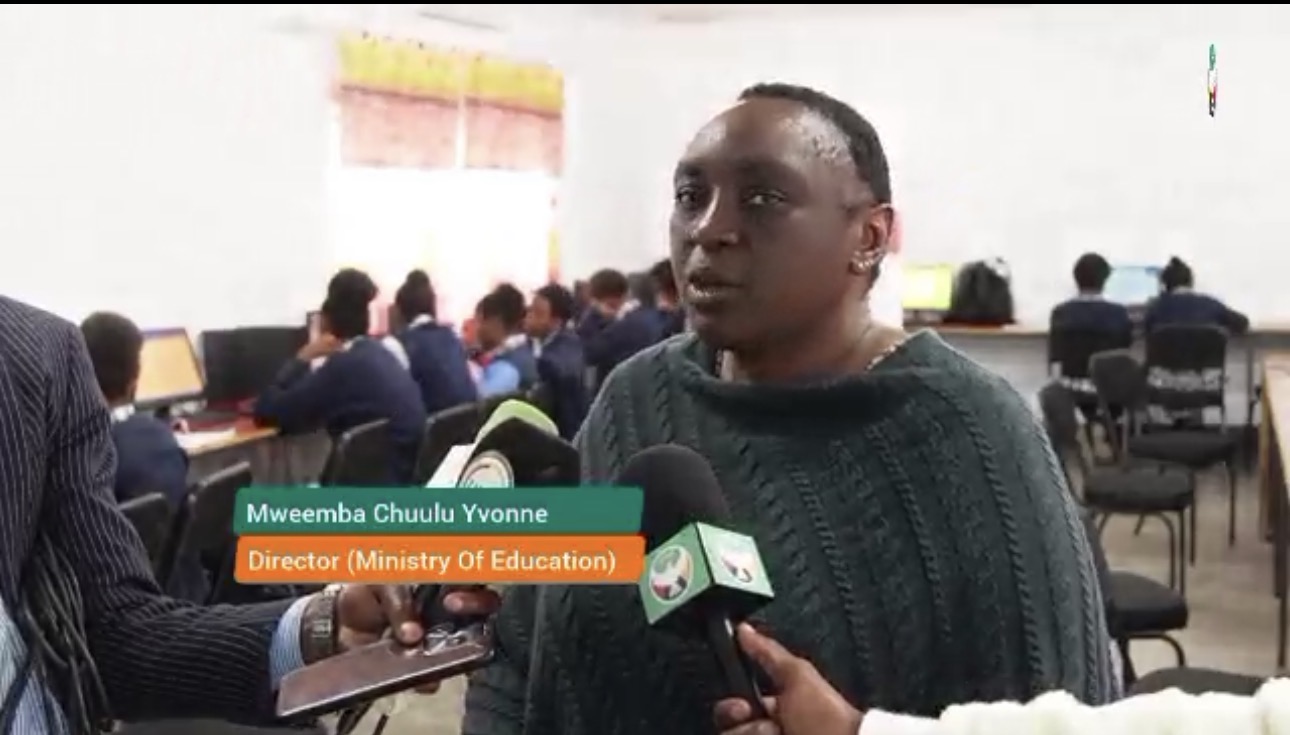
Mweemba Chuulu Yvonne, who is director for Secondary education at the Ministry of Education, expressed gratitude to UNICEF and Airtel Zambia for supporting the government’s efforts to expand digital education.
“Our resources are thinly stretched, making it difficult for us to do this by ourselves. Hence, the Ministry of Education is grateful to both UNICEF and Airtel Zambia for making this project a success,” she said.
St. Monica’s Secondary School Headteacher Matildah Soloka thanked the Ministry of Education for selecting the school as one of the programme’s beneficiaries.
She also expressed appreciation to Airtel Zambia for providing internet connectivity and to UNICEF for initiating the programme.
“The Digital Education Programme provides a unique yet important learning environment for pupils, as they can access learning even at home without being in school.
This can prove to be even more impactful during periods when schools have to close, as was the case during the COVID-19 pandemic,” Soloka said.
Partners reaffirm commitment.
During the visit, Airtel Africa Group Chief Executive Officer Sunil Taldar expressed satisfaction with the implementation of the programme at St. Monica’s Secondary School.
“We are happy to see this project is a success, and we hope to connect more schools to provide education connectivity,” Taldar said.
Meanwhile, UNICEF Representative Dr. Saja Farooq Abdullah reaffirmed the organisation’s commitment to ensuring that every child has access to quality education through digital learning.
“At UNICEF, we believe every child, no matter where they live, deserves the opportunities and support to learn, grow and thrive in an increasingly digital world,” she said.
Dr. Abdullah said digital education goes beyond providing technology.
“It is about equality and ensuring that children, including those in rural and underserved communities, have the same opportunities to learn, acquire skills and reach their full potential,” she said.
While commending the Ministry of Education and Airtel Zambia for their partnership, Dr. Abdullah said connecting the remaining 200 schools before the end of the project remains the key priority.
Selina Mtonga expressed optimism that the Ministry of Education will effectively manage the programme post project completion.
ENDS/GZ/Zambia Reports/PIX