
By Loson Mumba Jr
The Source of Political Power
Every election asks a deceptively simple question: who should govern? But beneath that question lies another, more fundamental one: who has the authority to decide?
In Zambia, the answer is found at the very beginning of the Constitution; “We, the People of Zambia.”
Those four words carry considerable weight. They remind us that political power does not belong permanently to those who occupy State House, Parliament or Cabinet. Government exercises power on behalf of the people, and elections are the constitutional mechanism through which that authority is given, renewed or withdrawn.
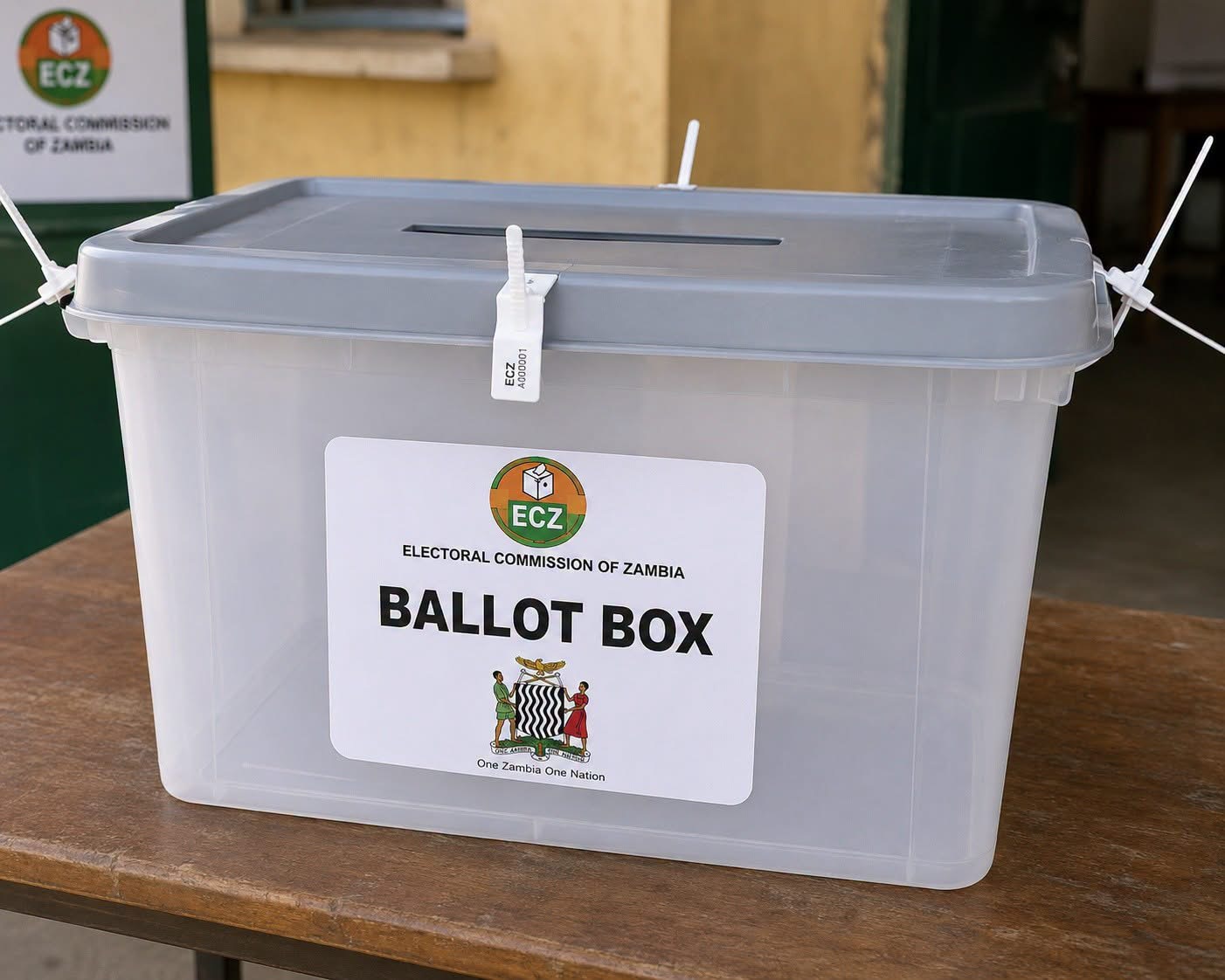
That is what makes 13 August more than another date on the political calendar. It is the day on which millions of Zambians will decide who should exercise public authority on their behalf for the next five years. That decision will reach far beyond the names printed on the ballot. It will affect the laws we live under, the priorities of government, the management of public resources and the direction in which the Republic moves.
The Right to Participate in Government
The Constitution places the citizen at the center of that process. Article 43(2)(b) provides that a citizen shall endeavor to “register and vote, if eligible,” in national and local government elections and referenda. Article 46 provides that every citizen who has attained the age of 18 is entitled to register as a voter and vote by secret ballot. Article 45 further requires the electoral system to be founded on universal adult suffrage and the equality of the vote.
These provisions are important because they establish that voting is not a favor granted by government. It is a constitutional means through which citizens participate in determining who exercises public power.
Judicial Recognition of the Right to Vote
Our courts have recognized the seriousness of that right. In Malembeka (Prisons Care and Counselling Association) v Attorney General and Another, the Constitutional Court considered the right of persons in lawful custody to vote. The Court’s decision affirmed an important constitutional principle: where the Constitution confers a right, that right cannot simply be taken away by ordinary legislation.
The case concerned prisoners. Its broader lesson, however, belongs to every citizen. The right to participate in choosing government is not a privilege for the politically connected. It does not depend on wealth, social standing or political influence. It belongs to the citizen.
And this year, the number of citizens entrusted with that responsibility is greater than ever. The Electoral Commission of Zambia has certified 8,786,300 registered voters for the 2026 General Election. Of these, 4,665,431 are women and 4,120,869 are men, with more than four million young people on the register.
A Right Must Be Used
Voter registration is only the beginning. A name on the voters’ register is not the same thing as a vote cast. In 2021, Zambia had 7,023,499 registered voters, yet only 4,959,332 votes were cast. Millions of citizens who possessed the right to participate ultimately did not exercise it.
That gap should concern us.
Democracy cannot be sustained by constitutional rights alone. Rights have meaning when citizens exercise them. This is why voting should not be reduced to a contest between political parties or personalities. It is a decision about who should receive the public trust to govern in our name.
For many citizens, the political choices before them may be disappointing. Some citizens may distrust politicians. Others may feel that none of the candidates represents their interests. Some may believe that a single vote cannot possibly change the outcome.
But democracy does not require citizens to agree with one another. It requires them to participate in deciding how their disagreement will be resolved.
On 13 August, the vote of a market trader will carry the same constitutional weight as that of a Cabinet Minister. The vote of a student will carry the same weight as that of a politician. The business executive and the unemployed graduate will enter the polling booth with precisely the same political power. That is what equality of the vote means.
The Authority of The Ballot
And when the votes are counted, it will not be the size of a rally, the volume of a campaign song or the amount spent on advertising that determines who has received the people’s mandate.
It will be the ballots.
This is why citizens must resist the temptation to withdraw from the process because politics has disappointed them. If you are dissatisfied with government, vote. If you distrust politicians, vote. If none of the candidates excites you, examine the choices before you and vote.
If you believe your vote is too small to matter, remember that democracy is built from millions of votes that are individually small but collectively decisive.
The Supreme law of the land has given citizens a voice. The responsibility now is to use it therefore do not allow someone else to determine the country’s future simply because you chose not to participate in determining it yourself because for one day only, the ordinary hierarchy of political power is reversed. Those who ordinarily govern must wait for those who are governed to speak and that right there is the quiet power of the ballot.
Hence when the polling stations open, the question will no longer be who wants power. The question will be who will the people give it to? For in a constitutional democracy, power may be exercised by government, but it belongs ultimately to the people.
On 13 August 2026, that power returns to The People.
Loson Mumba Jr holds a Bachelor of Laws (L.L.B) and focuses on Constitutional Law, Commercial Law and Criminal law.