
By Joseph Mapalo Kamanga
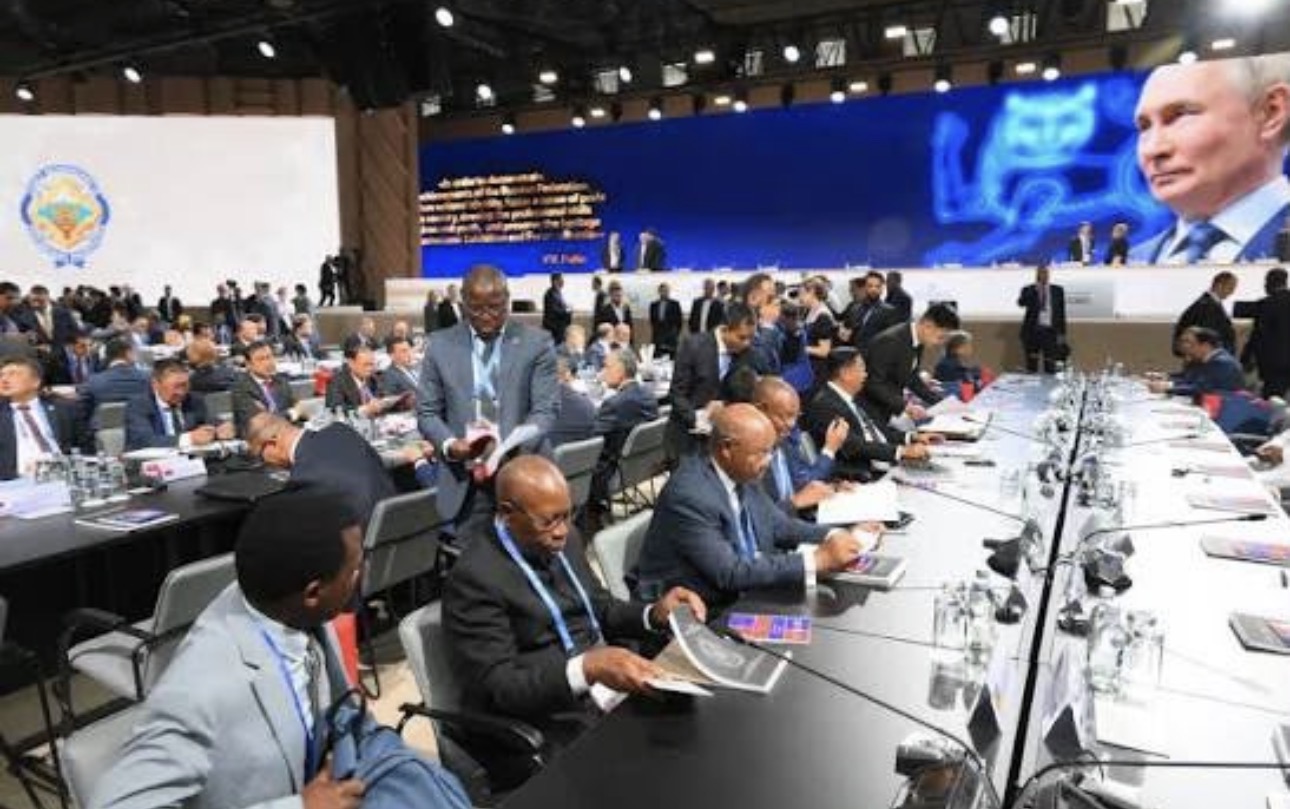
While local activist groups continue to monitor the unverified online job campaigns targeting young school leavers for overseas work, the official channels dealing with these complex international relations are focused on broader state strategies. Open source tracking and regional media networks confirmed the gathering of high-level African delegations in Moscow recently for an international security and economic forum. Ambassador of Zambia to the Russian Federation, Abdon Listone Mawere, was among the diplomatic representatives attending the sessions.
The high-level forum was created to be a place where intelligence chiefs, defense officials, and diplomats could share views on emerging global threats, cybersecurity operations, and regional economic stability. This summit was an important space where the safety risks of these employment networks could potentially be put on the table. For a continent like Africa, which grapples with a rise in unverified online job offers and digital recruitment,
The highly sensitive nature of international state security talks means it is unconfirmed to what extent the specific issue of deceptive youth recruitment was formally discussed at the same time. Diplomatic observers say that the details about work travel are often discussed in private side rooms, but explicit references to these specific recruitment programs did not appear in the public statements or agreements released after the forum.
This is the standard, cautious approach of international diplomacy. Official replies to questions directed to the Zambian Embassy in Moscow regarding the exact topics of discussion at the security forum have not been received, while the central government has also maintained its standard practice of not issuing public travel warnings or open policy statements on the subject.
The diplomatic silence starkly contrasts with the on-the-ground reality in Lusaka, where student leaders are witnessing a huge spike in predatory online advertising.
Commenting on the issue, ZANASU President Innocent Nshindano said the union was concerned about the increasing number of digital job offers and recruitment campaigns targeting young school leavers, especially those promoting overseas work-study programs and internships. These offers are often shared on social media platforms and messaging applications, Nshindano said. “Some of these deals may appear attractive, but many are not properly verified and are not under the regulatory supervision and official approval of governments, which is a serious concern about their legitimacy and safety,” he cautioned.
That is why ZANASU is calling for a radical change to the state’s approach to foreign recruitment. There is an urgent need for improved inter-agency coordination and tightening of vetting of overseas employment and scholarship frameworks to protect students and recent graduates, Nshindano observed.
“Institutions like the Higher Education Loans and Scholarships Board (HELSB) are pivotal as an anchor body for genuine scholarships and educational funding opportunities in Zambia,” said Nshindano, urging students to always verify opportunities through its official platforms. He added that the Ministry of Education was still a key player because most of the legitimate opportunities in the education sector were channeled or recognized through it. Nshindano also said that the Ministry of Foreign Affairs and International Cooperation, through embassies and consulates in destination countries, has an important role to play in ensuring that international programs are legitimate and conditions and safety standards are met. “It is important to enhance the coordination among these institutions to ensure that only verified opportunities are presented to the youth,” he said.
ZANASU’s urgency is set against the backdrop of past events, including the complex case of Lemekhani Nathan Nyirenda. He is a 23-year-old Zambian national who did his high school at Hillcrest Technical Secondary School in Livingstone before moving to Moscow on a government-sponsored scholarship to study nuclear engineering at the Moscow Engineering Physics Institute. His studies were interrupted in April 2020 when he was arrested on drug possession charges while working part-time as a courier delivering a package that his family maintained he was unaware contained anything illegal.
Nyirenda was held for nine and a half years in a penal colony outside Moscow before being recruited by the Wagner mercenary group under an arrangement promising state amnesty in return for military service. He was sent to the frontlines of the war in Ukraine and was killed in combat on September 22, 2022. His death prompted formal diplomatic inquiries between Lusaka and Moscow at the time, but the incident underscores the continuing fragility of citizens negotiating foreign legal and security spaces, a challenge that has now moved into the digital realm.
Now we are talking about such projects as the “AlabugaStart” relocation program in the Alabuga Special Economic Zone in Russia. This industrial zone was initially created to stimulate regional economic development but has been used for some technical manufacturing, including the assembly of drones for industrial and military use.The program has used ad campaigns on popular social media outlets like TikTok, Facebook, and Telegram to lure young applicants to fill the needs of domestic labor.
The ads often include hospitality, catering, or technology internships for young high school graduates from a variety of African countries. But when they arrive, participants are often under strict administrative control, including temporary holding of passports for visa processing and long shifts in manufacturing plants. Sending states also encounter a distinct regulatory problem with civilian employment and manufacturing under state auspices, especially when industrial zones are located close to the active conflict areas.
This quiet approach on the international stage comes against the backdrop of ongoing domestic assessments within the structures of Zambia’s government. Previously, administrative updates from the Ministry of Foreign Affairs had indicated that the implications of these foreign recruitment drives had been assessed internally and followed by a formal briefing by the vice president on the floor of the Zambian Parliament. This dual reality highlights a common governance challenge: how to balance immediate domestic welfare concerns with the protocols of international diplomacy.
And because official action is limited to parliamentary reviews rather than the kind of public diplomatic friction that would be necessary, student bodies are taking matters into their own hands. ZANASU is advising students to be very careful and verify before accepting any foreign opportunity. The union has clearly told students to verify all offers through official government channels like the Ministry of Education, HELSB, and relevant embassies and not to pay unknown recruiters or apply online informally without institutional backing.
“To fill the gap, ZANASU is currently working with different stakeholders to open up the opportunity sector safely and plans to hold regular career fairs that bring verified opportunities closer to students,” Nshindano said. Meanwhile, the union is stepping up awareness campaigns in schools and tertiary institutions to equip young Zambians with tools to identify, question, and shun high-risk or fraudulent recruitment schemes.
©️Zambia Reports| 2026